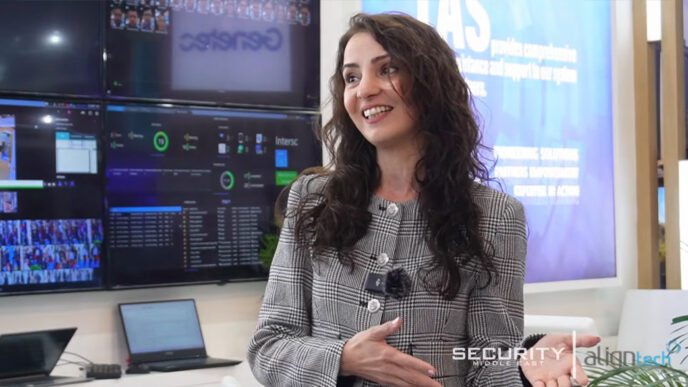
In tech and security, authenticity often feels like rebellion. My journey through these industries has been shaped by the challenge of being ‘the first’ in many spaces — a Latina, a woman, a foreigner in mostly male-dominated rooms. It is a journey that took me from founding a feminist book club during the pandemic to working in Saudi Arabia on projects that were as groundbreaking as they were contentious. Each step reinforced a lesson: progress requires engagement, not retreat.
The security industry, like many others, has long resisted change. Traditionally seen as hierarchical and exclusive, it is now at a crossroads. Rapid technological advancements, globalised threats and shifting societal expectations demand a more inclusive workforce. In the Middle East, this transformation aligns with the region’s ambitious initiatives like Vision 2030, where innovation and diversity are not just aspirations — they’re necessities.
Why Diversity in Security Matters
Security is about safeguarding the unpredictable, and diverse teams are uniquely equipped to do so. Research from McKinsey shows that companies with ethnically diverse leadership are 35% more likely to outperform their peers. The reason is simple: diverse teams bring varied perspectives, enabling them to approach problems creatively and adapt more effectively.
In the Middle East, where rapid modernisation meets deeply rooted traditions, a diverse workforce offers the ability to navigate these complexities with nuance. Diversity enhances trust — a critical factor in security. A team that mirrors the populations it protects is better positioned to address their needs with sensitivity and precision.
During my time in Saudi Arabia, I saw firsthand how diverse voices could reshape the security landscape. Despite systemic challenges, the inclusion of women, and especially foreigners, led to solutions that were not only innovative but deeply impactful. Leaders who valued different perspectives achieved breakthroughs that traditional approaches had overlooked.
Overcoming Barriers to Inclusion
Change, however, does not come easily. The security industry is still plagued by unconscious bias, workplace harassment and structural barriers that limit access and progression for many. In the Middle East, these challenges often intersect with cultural norms, creating additional layers of complexity.
I have felt these barriers acutely. As a foreign woman, my presence in certain rooms was often questioned — not for my expertise, but for the audacity of being there at all. Yet, I also found allies among leaders willing to invest in my voice and ideas. These moments of support proved that even in traditionally exclusive spaces, there is room for change when people commit to seeing beyond stereotypes.
Addressing these barriers starts with recognition. Organisations must implement unconscious bias training, not as a box-ticking exercise but as a genuine effort to challenge ingrained perceptions. Hiring practices must evolve to prioritise fairness, such as through blind resume reviews and standardised interviews.
Safe and supportive workplaces are equally essential. Policies against harassment and discrimination need to be backed by clear accountability mechanisms. Employees must trust that when they report issues, action will follow. I have seen retaliation myself. Beyond this, organisations need to actively remove barriers to entry. Many talented individuals, particularly women and minorities, are excluded simply because they lack access to networks or opportunities. I always felt the pressure to get fancy degrees to objectively prove myself and be taken seriously. And I have faced awkward situations in all continents, just for being a woman trying to get a job I am qualified for.
Building an Inclusive Culture
Diversity is only the first step; inclusion is what sustains it. A truly inclusive culture ensures that every individual feels valued and empowered to contribute.
This begins with leadership. Inclusive leaders model behaviours that encourage collaboration and amplify underrepresented voices. During my time in Saudi Arabia, I worked with leaders who prioritised my contributions despite my outsider status. Their support created opportunities I never imagined — such as speaking at global conferences and leading critical discussions on cybersecurity.
Inclusive practices must also be embedded into company systems. Transparent pay structures, equitable promotion policies and regular diversity audits ensure fairness. Diversity training should go beyond awareness, equipping teams with tools to create inclusive environments tailored to the region’s unique cultural dynamics.
Finally, fostering openness is essential. Employees need spaces to share experiences and provide feedback without fear. During the pandemic, I created a feminist book club to explore systemic issues and solutions in a supportive setting. That same spirit of open dialogue can — and should — be cultivated within workplaces.
Lessons from My Journey
Living and working at the United Nations and then in the Middle East offered me a front-row seat to the complexities of fostering diversity in security. Criticism came from all sides — some questioned my presence in the region, while others viewed my work through the lens of stereotypes about women. But I believed, and still believe, that being in the room matters.
There were moments of heartbreak and frustration, but also triumphs that reaffirmed the power of persistence. I learned that revolutions in male-dominated fields are not waged from the sidelines. They require showing up, challenging norms and daring to envision something better.
One particularly challenging project, earlier in my career, involved integrating gender perspectives into a 99% male-dominated workplace. The resistance was palpable, but by engaging with allies and staying focused, we achieved outcomes that surprised even the sceptics. In one year we increased female employees from 1% to 5%. These experiences taught me that progress often happens incrementally, built through engagement rather than retreat.
Let’s Build It Together!
The Middle East is undergoing a transformation, and the security industry must evolve with it. Diversity and inclusion are not optional — they are strategic imperatives for organisations aiming to thrive in a rapidly changing world.
For leaders, this means going beyond rhetoric. Set measurable goals for diversity, invest in mentorship and training, and hold yourself accountable for creating inclusive spaces. For employees, it means recognising the value of your unique perspectives and pushing for systemic change where it’s needed.
The revolution won’t happen overnight, but it will happen. It will be built by individuals and organisations willing to challenge norms, embrace discomfort and lead with vision.
As someone who has lived this journey, I can attest: the future of security depends on our willingness to engage, to persist and to reimagine what’s possible. Yallah!
www.betaniaallo.com