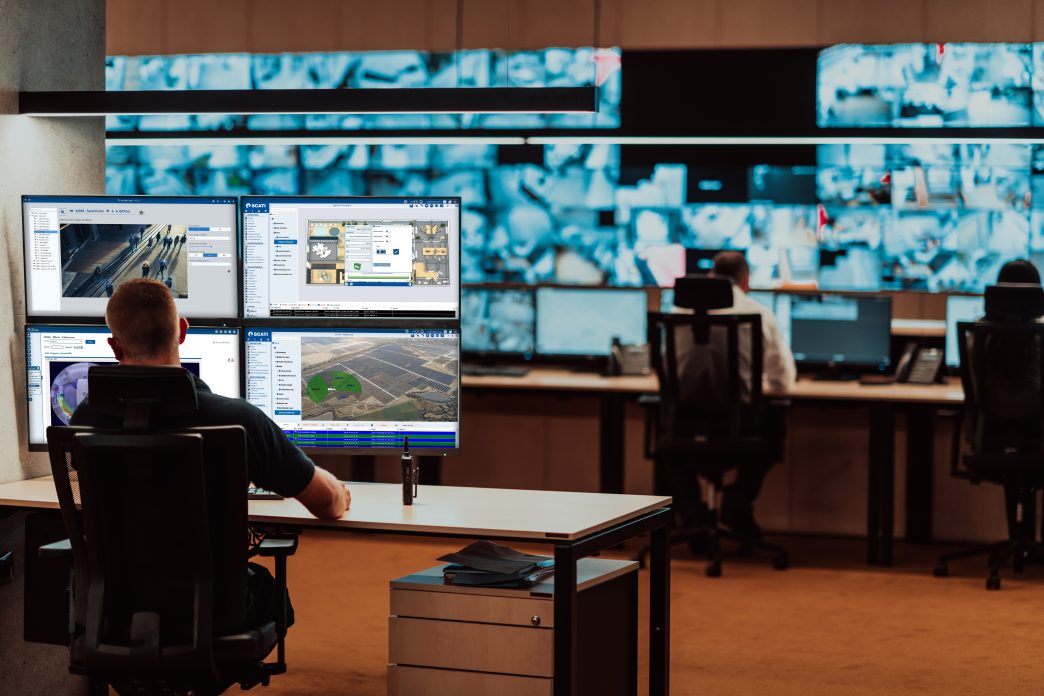
- In security, system integration is already a given
- Video surveillance, access control, alarms and other systems are expected to share information so that operations can function properly
- But integration does not always lead to better incident management
Written by Tamer Mohannad, Regional Sales Manager ME&A (Middle East & Africa), Scati
“Connecting systems is no longer enough. The real challenge is to give continuity to the operational cycle: detect, investigate, respond, evaluate and decide with clarity”.
In security, system integration is already a given. Video surveillance, access control, alarms and other systems are expected to share information so that operations can function properly. But integration does not always lead to better incident management. In many control rooms, systems are connected, yet operations remain fragmented.
That is the core issue. Sharing data is not the same as sharing context. When each system raises alerts separately, operators receive noise instead of a clear picture of the situation. And without that context, response becomes slower, less consistent and more dependent on individual experience.
That is why the question is no longer only which systems can be integrated, but how to make that integration support a coherent operation. Detecting, investigating, responding, evaluating and deciding are all part of the same cycle. If each phase works in isolation, integration loses much of its value.
Detect: seeing more does not always mean understanding more
Every operation begins with detection. In environments with multiple subsystems, the control room receives a constant stream of events: a technical alarm, an out-of-hours door opening, a perimeter alert or a video-related incident. Every alert demands attention, but not all of them provide the same level of information or require the same response.
Systems generate notifications, but they do not always help distinguish what requires immediate action from what can be resolved through a simpler verification. The result is familiar: too many alerts competing for attention, while the operator must mentally organise what the system has not structured.
Reducing noise means providing an initial, useful reading of the incident: where it is happening, which asset is affected, whether it coincides with other events and whether it breaks an expected pattern. Without that first layer of interpretation, detection remains just a notification.
Investigation: context is what turns an alert into an incident
Investigation is the moment when it becomes clear whether an isolated signal really matters. It is also the phase in which many control rooms lose more time than they should.
The problem is rarely the lack of information, but its dispersion. To verify an incident, the operator may need to review the related video, check whether authorised access took place, locate the affected area correctly and
assess whether there is any condition that explains the event. When each check requires moving between systems and reconstructing the sequence step by step, investigation stops being an agile process.
That additional effort delays verification increases the margin for error and makes the outcome too dependent on prior knowledge of the site. Two operators facing the same situation may reach different conclusions if they are not working with the same level of context.
This is where unified operations show their value. Not because they remove complexity, but because they organise it. The alert no longer arrives alone; it is presented within a more useful framework: location, related evidence, coinciding events, relevant history and basic criteria for interpretation.
Respond: consistency matters as much as speed
Responding well is not only about time. It also depends on how consistently the response is carried out.
In continuous operations, across different shifts and operator profiles, one of the most common risks is variation. Similar incidents may be handled differently because each person interprets the information differently or because the procedure is not clear enough. That lack of consistency affects both effectiveness and traceability.
Fragmentation becomes especially visible when an incident requires several checks and coordination across teams. A single signal may require visual verification, access validation, internal communication and follow-up. If each part of the process is handled through a different logic, the response loses continuity.
This is not about automating complex decisions or removing the operator’s judgement. It is about reducing friction, clarifying steps and avoiding a response that depends on improvisation.
Evaluation: without traceability, there is no operational improvement
Many organisations treat an incident as closed once it has been resolved. That is where another essential part of the operation begins: understanding what happened and how it was handled.
Proper evaluation means being able to reconstruct the full sequence: which alert was received, what evidence was reviewed, what priority was assigned, what actions were taken, who intervened and how the case was closed. Without that traceability, it becomes very difficult to identify recurring errors, refine procedures or learn from experience.
Traceability is an operational necessity. It supports better supervision, helps justify decisions, makes response times easier to review and strengthens internal audits. It also provides something just as important: confidence. When a team knows its actions can be reviewed clearly, it works within a more stable framework.
A mature operation turns every incident into an opportunity to refine criteria and improve performance.
Decide: the real value of unified operations
The real qualitative leap does not lie only in detecting more or responding faster. It lies in making better decisions.
And better decisions require more than available data. They require context, hierarchy, relationships between events and a shared operational logic. When those elements are missing, decision making becomes slower, more uneven and more vulnerable to error.
Conclusion
Integration remains necessary, but it is no longer enough. In complex operations, value does not appear simply when systems share information, but when that information moves coherently through the entire operational cycle.
Detecting, investigating, responding, evaluating and deciding should not operate as separate layers. When they do, security suffers. When they work within the same logic, operations gain clarity, consistency and control.