Aviation is entering one of its most demanding security eras, as airports, airlines and ANSPs juggle rising passenger volumes, geopolitical tensions and increasingly sophisticated threat actors. At the same time, digital transformation, smart airport projects and expanded connectivity across operational technology are exposing new vulnerabilities that traditional perimeter-focused approaches were never designed to handle. With the shifting threat landscape, from insider risk and drone disruption to cyberattacks on critical systems, we ask what security leaders must do now to keep people, assets and operations safe.
1. Insider Threats
Challenge:
- Employees, contractors or vendors with access to sensitive airport areas may misuse their privileges.
- Potential for sabotage, smuggling or aiding external threats.
Alleviation:
Implement rigorous background checks and continuous vetting.
Enforce stringent access controls based on role-based privileges.
Deploy AI-driven monitoring systems to detect abnormal behaviour.
Conduct regular insider threat awareness programmes and training.
2. Cybersecurity Vulnerabilities
Challenge:
- Increasing reliance on digital systems exposes aviation to cyberattacks.
- Risks of hacking into air traffic control, airport databases or passenger information.
Alleviation:
Adopt zero-trust cybersecurity models and advanced encryption.
Implement real-time threat detection (AI & ML-based intrusion detection systems).
Regular penetration testing and cybersecurity audits (aligned with ISO 27001, NIST).
Conduct cybersecurity training for staff to recognise phishing and social engineering threats.
3. Terrorist Threats & Hijackings
Challenge:
- Aviation remains a prime target for terrorist activities, including hijackings and bombings.
- Evolving tactics such as improvised explosive devices (IEDs) and lone-wolf attacks.
Alleviation:
Strengthen intelligence-sharing and international cooperation among security agencies.
Enhance passenger profiling & behavioural detection techniques.
Deploy AI-based surveillance and predictive analytics for anomaly detection.
Utilise CT-based screening and advanced explosive trace detection at checkpoints.
4. Drone (UAS) Threats
Challenge:
- Unauthorised drones can disrupt airport operations or be weaponised.
- Risk of drones being used for surveillance or smuggling.
Alleviation:
Deploy counter-drone technology (RF jammers, AI-based tracking, and geo-fencing).
Enforce strict drone regulations near airport perimeters.
Train airport security personnel in drone threat response strategies.
Implement automated drone detection and mitigation systems.
5. Human Trafficking & Smuggling
Challenge:
- Airports are a major transit point for illegal trafficking of humans, drugs and contraband.
- Criminals exploit weaknesses in security screening and border control.
Alleviation:
Train airport personnel to recognise behavioural indicators of trafficking.
Leverage biometric technology (facial recognition, iris scanning) for identity verification.
Strengthen partnerships with Interpol, law enforcement and anti-trafficking agencies.
Conduct real-time data analysis to identify suspicious travel patterns.
6. Passenger & Cargo Screening Inefficiencies
Challenge:
- Balancing security with operational efficiency remains a challenge.
- Traditional screening methods can cause delays and bottlenecks.
Alleviation:
Deploy AI-powered automated screening lanes to reduce congestion.
Use computed tomography (CT) scanners for faster, more accurate detection.
Implement risk-based screening programmes (TSA PreCheck, EU Smart Borders).
Enhance the use of explosives-detection canine units.
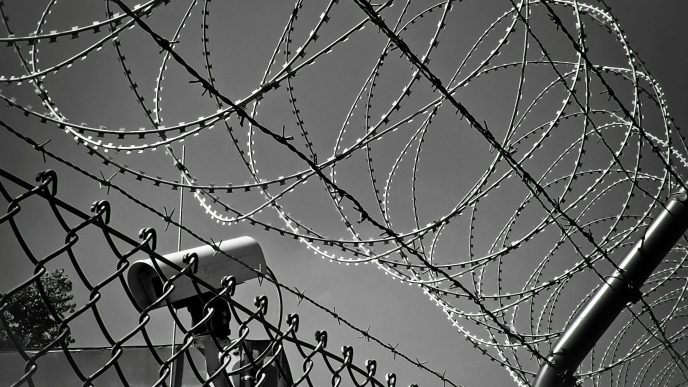
7. Physical Perimeter Security Breaches
Challenge:
- Unauthorised individuals may attempt to breach restricted airport zones.
- Risks include stowaways, sabotage, or unauthorised vehicle access.
Alleviation:
Deploy AI-driven perimeter intrusion detection systems (thermal imaging, motion sensors).
Implement biometric access control and multi-layered security zoning.
Increase the use of autonomous security robots and UAV patrols.
Conduct regular perimeter security audits and penetration testing.
8. Geopolitical Instability & Civil Unrest
Challenge:
- Political conflicts, strikes, or civil unrest can threaten aviation operations.
- Increased risk of sabotage, protests or targeted attacks.
Alleviation:
Establish comprehensive geopolitical risk assessments.
Maintain crisis management and emergency response protocols.
Develop adaptive security frameworks to respond to emerging threats.
Ensure airport staff and airline crew receive conflict de-escalation training.
Aviation security requires a multi-layered, intelligence-driven and technology-enhanced approach. By integrating advanced security technologies, proactive threat intelligence, and collaboration with global agencies, aviation security can effectively mitigate risks while ensuring operational efficiency and passenger safety.