
The Kingdom of Saudi Arabia, home to some of the world’s most vital petroleum, petrochemical, energy and industrial assets, has placed industrial security at the forefront of national resilience. At the centre of this effort stands the Supreme Authority for Industrial Security (SAIS), the regulator ensuring that physical protection and industrial security standards are regulated and aligned with international best practice.
SAIS – From oversight to strategic leadership
SAIS, (formerly the High Commission for Industrial Security (HCIS)) Directives continue to shape the protection of the Kingdom’s most vital assets.
Any project that SAIS have jurisdiction over follows a four-stage workflow. Each stage is required to align with applicable SEC Directives requirements:
- Stage 1: Security Risk Assessment & Concept of Design
- Stage 2: Preliminary Design
- Stage 3: Detail Design
- Stage 4: Compliance & operational readiness documentation
Approval of documentation for Stage 1 through 3 is required prior to the construction, procurement or installation of any new security equipment, system or security infrastructure.
Approval of Stage 4 documentation is required during the commissioning stage of the security system but prior to declaring the facility operational.
The foundation of physical security: Key principles
The fundamental principles of layered security and defence in depth include physical, technical and operational control measures arrayed at different and multiple layers, and contribute to one or more of the following – deterrence, detection, delay/denial, response and recovery.
Layered security: A framework for industrial resilience
Layered security often referred to as ‘defence in depth’ is central to industrial protection. It recognises that no single measure can be relied upon to stop a motivated adversary. Instead, facilities must be safeguarded through a series of mutually reinforcing layers, beginning at the outermost boundary and extending inward to the core of critical operations. Each layer adds a barrier that potential intruders must overcome, increasing the site’s security. The idea is that if one layer is breached, the other layers can still provide protection.
This approach is fully aligned with SAIS Directives, which guides consultants and facility operators to apply comprehensive protection across perimeters, access control points, surveillance systems, operational zones and operational readiness. The development of technical, engineering, administrative and regulatory procedures mandated by SAIS ensures that each facility implements these layers in a structured manner, underpinned by a Security Risk Assessment, Business Criteria Analysis and Facility Security Classification (FSC).
From outer fencing, gates, patrol zones and lighting to integrated security systems defined in SEC‑05, the Directives ensures each layer serves a specific purpose within the overall defensive architecture.
The Ds and Rs of physical security
Deter: Establishing a visible, credible security posture
Security measures provide a visible deterrent to potential adversaries contemplating attacks or criminal activity against the development or people within, and seek to change the calculus of successful attack realisation. Therefore, anyone crossing the security measures understands the implication and can be considered as a potential aggressor. Deterrent measures ultimately aim to influence a threat actor to decide against carrying out their intended action, and to choose a different target.
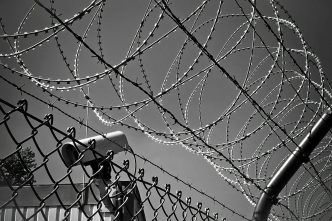
A facility’s perimeter, often governed by SEC‑02 requirements, is designed to project strength and preparedness. Security fencing, adequate lighting, controlled gatehouses and prominent surveillance cameras all serve as psychological barriers before they ever become physical ones.
Compliance with SAIS classification‑based requirements reinforce the message that a site is prepared and well‑defended. According to the Directives, each facility’s level of protection must match its assigned security classification, ensuring that deterrence is proportionate to risk.
Detect: Achieving early, accurate awareness
Detection measures can have some deterrent value for certain threat actors, but ultimately, they aim to provide early warning so that delay and response measures can be mobilised. Measures transform deterrence from a passive posture into an active defensive mechanism. SAIS mandates robust surveillance and monitoring systems as part of its comprehensive security protection requirements, ensuring coverage across all critical zones.
Effective detection includes:
Video Surveillance Systems (VSS), with resolution and coverage standards detailed against MOI regulations
Intrusion Detection Systems (IDS) along perimeters
Access control systems monitoring entry and exit points
Security personnel, trained to observe, question and escalate
Detection is where technology and humans converge. No matter how advanced the system, trained officers remain essential. They interpret the alert or alarm so that a response can be dispatched.
Delay: Slowing progress to protect the facility’s core
Delay or denial measures are typically physical or operational measures that are designed to inhibit an attacker or the progression of a threat to a protected asset so that security response measures can be executed. Delay or denial measures include fences, patrol zones, walls, gates, hostile vehicle mitigation, turnstiles, access-controlled doors and zones, or other barriers that must be overcome by an attacker. Delay/denial measures provide a functional result of increasing valuable time for response measures to be organised.
Delay mechanisms are vital to preventing adversaries from reaching critical assets. SAIS Directives require that delay elements correspond to the facility’s FSC, ensuring proportionality based on risk and operational importance.
In high‑risk facilities, delay can mean the difference between a contained incident and a catastrophic breach. The layered design ensures that even if one barrier is compromised, multiple others stand ready to slow an intruder’s progress.
Respond: Coordinated, trained, and timely action
Response is where the layered system culminates, transforming information into action. The actions taken to neutralise, contain or mitigate an event. SAIS places strong emphasis on emergency planning, training and operational readiness.
An effective response layer includes:
On‑site security forces deployment
Real‑time communication pathways defined in SEC‑08
Command‑and‑control centres capable of incident coordination
Coordination with government agencies (as required by SAIS)
Response is not simply tactical, it is procedural. Policies, drills, simulations and interagency coordination ensure that when incidents occur, they are managed swiftly and professionally.
Security as a national responsibility
SAIS directives provide structured, regulatory requirements, ensuring consistency, quality and compliance. Technology detects, barriers delay, systems record, but it is people who interpret, decide and respond.
The Kingdom’s industrial base is expanding rapidly under Vision 2030, and with that expansion comes more complex risks. SAIS continues to elevate the Kingdom’s industrial resilience by combining regulation, technological adaptation, strategic oversight and workforce development.
As Saudi Arabia advances toward Vision 2030, the SAIS will remain a vital enabler, protecting infrastructure, empowering industries and shaping a safer, more sustainable future.
The security principles introduced protect industries, preserve national assets and safeguard the lives of those who work within them.
As security professionals, our responsibility is to uphold these principles with consistency, integrity and commitment, standing alongside the SAIS in shaping a safer, stronger future for the Kingdom.