- AI continues to reshape both physical and cyber security
- Experts have shared their predictions for 2026
- The changes are set to reshape the landscape
As we move into 2026, artificial intelligence (AI) continues to reshape both physical and cyber security, and now, experts are putting their two cents into what’s to come next.
From smarter video surveillance to automated cyber attacks, the pace of change is accelerating.
At the same time, supply chains, regulation and board-level accountability are becoming central to how organisations manage risk.
Below are the key trends expected to define security in 2026:
Building the foundations for AI with VSaaS
By Andreas Beerbaum, VP of global sales and services, physical security, for Hexagon’s Safety, Infrastructure & Geospatial division
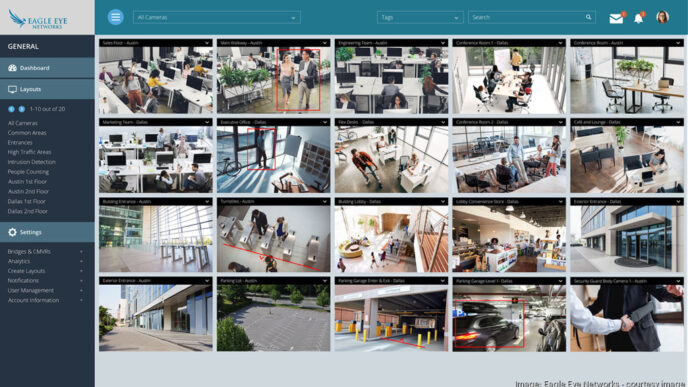
AI-powered video analytics depend on strong foundations. Traditionally, video management systems (VMS) were installed on-site, requiring high upfront costs, regular maintenance and complex upgrades.
But that is changing fast.
Cloud-based VMS, often called VSaaS (video-surveillance-as-a-service), is becoming the preferred option, especially for organisations with multiple locations. VSaaS platforms allow teams to view and manage video from different camera brands, from anywhere. When combined with generative AI, they improve awareness, speed up response times and simplify investigations.
Instead of relying solely on people watching screens, AI analytics provide a constant second set of eyes. They analyse live footage in real time, flag unusual behaviour and alert teams before incidents escalate.
Cloud-first video systems also reduce on-site hardware, cutting energy use and carbon emissions — an important goal for many organisations.
LiDAR moves from hype to real value
The global LiDAR security market is valued at around USD 1.38 billion in 2025 and is expected to grow sharply in the years ahead.
In 2026, LiDAR will feature more heavily across critical infrastructure, aviation, rail, data centres, correctional facilities, warehouses and logistics operations.
Better and faster sharing of video evidence
Changes expected in 2026 will increase demand even further.
Retailers are investing heavily, with crime prevention costs now estimated at £1.8 billion per year. VSaaS makes evidence sharing easier for both large chains and smaller shops, removing the need for USB sticks or discs. Many modern systems also integrate body-worn video, now widely used by global retail staff.
AI to increase zero-day vulnerabilities
By Adam Meyers, SVP of Counter Adversary Operations, CrowdStrike
In 2026, AI will dramatically accelerate the discovery of zero-day vulnerabilities. As AI speeds up software development, it also becomes highly effective at finding flaws in code.
One approach is targeted analysis, which is slow and resource-heavy. The other is automated fuzzing, where systems push software until it breaks. Generative AI is transforming fuzzing by improving testing methods and analysing crash data at scale.
Advanced attackers are already investing in this, making it cheaper and faster to find and weaponise vulnerabilities. The organisations that succeed will be those that use AI just as effectively — finding, fixing and hunting for zero-days as quickly as attackers do.
Supplier risk becomes a board-level issue
By Aleksandr Yampolskiy, Co-Founder and CEO, SecurityScorecard
In 2026, supplier cyber risk will be treated like financial risk. CEOs will track exposure across their suppliers as closely as cash flow.
Security teams will move away from annual audits and questionnaires. Instead, they will demand continuous proof of security performance, real-time alerts and daily KPIs shared at board level.
With AI embedded in most digital products, organisations will also require visibility into their partners’ AI models, data sources and dependencies. Supply-chain security will become a daily operational metric, not a yearly tick-box exercise.
Shadow AI and the AI Bill of Materials
Uncontrolled ‘shadow AI’ will reach a breaking point in 2026. Organisations will be forced to map and govern every AI model used across the business.
The AI Bill of Materials will emerge as a new standard, detailing which models are in use, what data they rely on, and whether they are secure, explainable and compliant.
Fully autonomous systems will remain rare. Most organisations will combine agentic AI with human oversight. Those that clearly link AI governance to revenue protection and customer trust will stand out.
Cybersecurity becomes a performance metric
In 2026, cyber risk will be measured in financial terms. Boards will expect clear answers to questions like: “What is our exposure today?” and will compare resilience against peers in real time.
Security ratings, continuous monitoring and financial impact analysis will replace simple red-amber-green dashboards. Executive accountability will increase, with CEO and CISO incentives tied to measurable security outcomes. Cyber resilience will be treated like any other core business result.
A new generation of cyber leaders
By Steve Cobb, CISO, SecurityScorecard
CISO burnout will reshape leadership in 2026. With rising personal liability, tighter budgets and growing regulatory pressure, many experienced CISOs will move into advisory, vCISO or vendor-facing roles.
Field CISOs within technology providers will grow in influence, helping customers turn security strategy into real business value. Cyber leadership will increasingly operate across organisations, not just within them.
Data sprawl becomes the biggest risk
The largest cyber threat in 2026 may not be malware, but uncontrolled data sprawl. Sensitive data now flows across APIs, SaaS platforms and partner ecosystems, often without clear ownership.
The next generation of cyber professionals is tackling this with data-centric security models. Their focus on visibility and control could finally help organisations regain oversight in a borderless digital world.
Regulation, insurance and visibility to reshape trust
By Michael Centralla, Andrew Correll and Avesta Hojjati, SecurityScorecard
By 2026, cyber resilience mandates will become enforceable, particularly across critical infrastructure and supply chains. Compliance will no longer be enough — continuous, measurable security will be required.
Cyber insurance will also evolve, shifting from simple payouts to integrated services that include monitoring, response and prevention. AI risk will drive new policy language and stricter underwriting.
At the same time, visibility will become a competitive advantage. Organisations that can prove, not just promise, that they are secure by design will earn greater trust from customers, partners and regulators.
Are you prepared?