


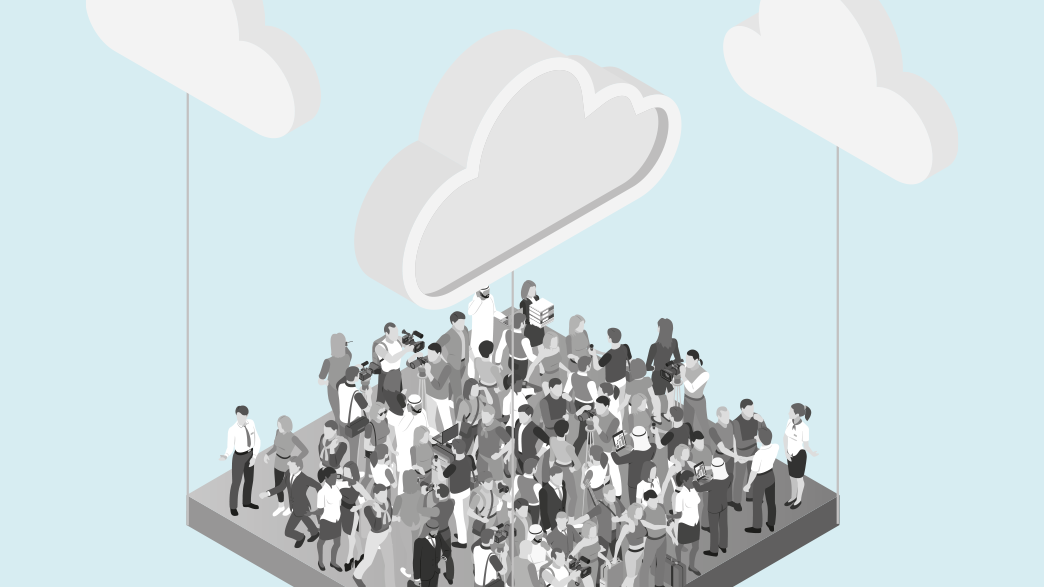
Security at a crowded airport terminal, stadium entrance or city transport hub fails when a camera goes offline, a credential is misused, a queue builds up near an exit, or a control room receives too many alerts and too little context. In those moments, cloud security becomes part of how safely people move through physical spaces.
The bigger change is that cloud and hybrid architectures are moving deeper into real-time security operations. A modern video system is no longer only there to record what happened. With AI-assisted analytics, sensor integrations and workflow automation, it can help operators understand what is happening now and where attention is needed next.
The situation at a shopping mall before a major event, an airport during peak travel, or a metro station after a service disruption can change virtually every minute. People do not move through these environments in neat patterns, and here is where AI-integrated video management systems play a vital role.
Video intelligence can help operators spot congestion, identify blocked paths, understand dwell time and respond before a manageable crowd becomes a risk. But that only works if the cloud layer behind the system is secure, available and governed.
The weak point is often the user identity
Identity is the foundation for controlling who can access cloud resources, from where and under what conditions. For video management systems, it defines which users can view live feeds, export footage, change retention settings, adjust analytics settings or connect to third-party applications.
In high-traffic venues, those privileges are important, especially when a control room may need rapid access during a safety incident. But that does not mean every user should have the same access every day. Role-based permissions, multi-factor authentication, conditional access, and regular access reviews are what keep useful systems from becoming dangerous ones.
Visibility beats blind trust
The security infrastructure in many organisations has grown in layers over time, with legacy cameras, new analytics, cloud dashboards, access systems, mobile apps, storage platforms and integrations often added by different teams at different moments. Each layer may work on its own, but the total picture can become foggy.
Risk often hides in configuration, such as exposed storage, excessive access, incomplete logs or integrations that move data beyond intended boundaries. As cloud environments become more distributed, organisations need identity-led access, continuous verification and consistent security policies rather than relying on traditional perimeter controls.
Recurring risks such as data breaches, weak access controls, insecure interfaces and system misconfigurations continue to underscore the need for stronger cloud governance. The UAE’s National Cloud Security Policy aligns with this requirement by setting out clear security standards, governance responsibilities and risk management expectations. Cloud adoption for business leaders should advance in step with governance and security to ensure sustainable growth and resilience.
For physical security teams, that means knowing where video data is stored, who can access it, how long it is retained, how it is protected and how activity is audited. It also means testing integrations. A cloud-connected video platform becomes more valuable as it integrates with more systems, but each connection requires a security model.
Crowd intelligence needs a resilient architecture
Crowd and flow management puts a different kind of pressure on cloud security. Unauthorised access is only one part of the risk. In these environments, operators also need to trust that alerts, dashboards and shared footage remain accurate as people move through the space.
This is particularly relevant in regulated sectors such as aviation, where security authorities require strict control over access, retention and auditability of surveillance data.
If analytics flag a developing bottleneck at an entrance, operators need to trust the alert. If a dashboard shows crowd density across a venue, they need to know the data is up to date. If an incident requires sharing footage with another team, the workflow must be secure yet not so slow as to be useless. In a fast-moving incident, resilience keeps the system from becoming another point of failure.
This is where hybrid architecture often makes sense. Some processing may happen at the edge, close to the camera, where speed and continuity are essential. Other functions may sit in the cloud, where scale, storage, analytics and remote collaboration can be managed more efficiently. The aim is not to force everything into a single environment, but to align architecture with operational risk.
Best practice is rarely glamorous. It usually comes down to encryption, segmentation, monitoring, audit trails, access control, patching, failover testing and rehearsed incident workflows.
Responsible AI depends on secure cloud foundations
AI adds another layer to this discussion. As video systems become more intelligent, they rely on trusted data pipelines, secure processing and strong privacy controls. If the cloud environment is weak, AI does not magically make it stronger. It simply gives bad architecture more influence.
Responsible AI in video security needs clear boundaries. Teams need to know what data is being used, how it is protected and who is accountable when the system is uncertain. That discipline is not a drag on innovation. It is how new systems survive real scrutiny from regulators, customers and the public.
There is also a growing importance of privacy in video AI. Tools can help organisations use video data more responsibly by protecting identities. This connects AI, privacy and practical deployment rather than treating them as separate conversations.
In busy public spaces, that is an important distinction to keep in mind. Many use cases do not require knowing who a person is. They simply require understanding movement, density, direction, dwell time and risk. The more organisations can separate operational insight from unnecessary personal identification, the easier it becomes to build trust.
The real benefit is operational trust
The strongest cloud-based security systems are not stronger simply because they are cloud-based. Their strength comes from identity controls, governance, resilience, privacy and a clear operational purpose.
In many UAE and GCC environments, data residency and sovereign control requirements further reinforce the need for hybrid architectures with clearly governed data flows.
That is the practical mindset CTOs and security leaders need. Cloud can make security systems more flexible, scalable and useful across complex environments. It can help organisations connect video to analytics, workflows and AI-assisted decision-making. It can support better crowd and flow management in the places where people gather, move, wait and sometimes panic.
But the cloud is not a shortcut around discipline. It raises the standard. Organisations need to know what they are connecting, why they are connecting it, who controls it and how it behaves under pressure.
Cloud-based security should not mean moving every system off-site and hoping for the best. Serious security leaders need hybrid, governed and auditable environments that provide operators with better information without sacrificing control.
When cloud security is done properly, the benefit is not simply stronger protection against cyber threats. It gives operators something more practical: systems that remain available, data that is handled responsibly and sufficient visibility to act when movement through a space begins to change.
This feature appeared in issue 149.


