
As public safety agencies look to the future, what is the single biggest technological challenge they face in the transition from trusted legacy systems like TETRA to modern broadband networks?
It’s navigating the perceived risk of moving from familiar technology to next generation solutions. The key is to de-risk the process, ensuring that the new technology exceeds the resilience and reliability of the old, while unlocking the transformative capabilities of the new. This includes identifying and fixing weaknesses before products are shipped, such as through third-party penetration testing.
Off-network communication is vital for first responders. As agencies move away from the Direct Mode Operation (DMO) found in legacy radio, what will replace it in a 5G world?
Nascent 5G-native technologies such as Sidelink are being trialled to enable secure and reliable device-to-device communication, independent of fixed network infrastructure. It is aimed at ensuring connectivity in remote areas, underground or during network outages. Zebra is working with partners to develop these standards-based solutions.
The scale of replacing an entire fleet of devices is a daunting prospect for any government agency. How can this transition be made more manageable, both financially and operationally?
A phased approach is essential, because the migration will be gradual. That’s why we designed the FR55 to emulate a familiar radio-like experience via Remote Speaker Microphones (RSM). Narrowband and broadband systems will coexist and can interoperate. The Zebra ET65 tablet is now certified for Airbus Agnet, which enables seamless communication in hybrid TETRA networks. A gradual transition allows agencies to manage the investment over time. And the workflow efficiency gains will deliver a strong return on investment over the device lifecycle. For example, automated device-tracking using RFID reduces admin time and asset loss.
How can public safety leaders be confident that the devices they invest in today will remain secure and effective for years to come, avoiding the risk of technological obsolescence?
Public safety leaders should lean upon suppliers with extensive experience in future-proofing enterprise Android deployments. The Zebra FR55 is supported with software and security updates for a minimum of eight years, upgradeable to Android 18. This longevity is backed by a deep-rooted security posture, from silicon-to-cloud security and hardware-rooted cryptography, such as Zebra’s Secure Element which acts as a digital vault.
Beyond voice and data, how will the advance of AI on a mobile device practically benefit a first responder on the frontline?
AI will be a transformative partner for frontline personnel. The new generation of rugged devices has the processing power to run sophisticated AI applications directly on the handset. This enables a paramedic using real-time language translation to communicate with a non-native speaker; a firefighter to use image recognition to identify hazardous materials; or a police officer to secure his device through facial biometrics. AI-driven noise cancellation can ensure crystal-clear voice commands in the loudest environments. This supports delivering real-time intelligence and situational awareness directly into the hands of the user, making them safer and more effective without adding cognitive load.
At Milipol Qatar 2026, what is your key message to government and public safety leaders in the Middle East as they plan their technology roadmap?
Our message is one of partnership and preparedness. The transition to mission-critical broadband is a long journey. At Zebra, we have decades of experience in mass mobile technology deployments for critical industries. We are committed to providing the region’s public safety agencies with the tools and confidence they need to protect their communities.
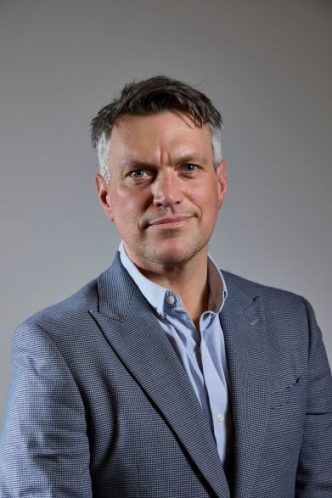
Oliver Ledgard
Oliver is the Government and Public Safety Director, EMEA, Zebra Technologies, focusing on connected frontline and asset visibility solutions for frontline public safety workers. He brings over 20 years of experience to the field. Prior to joining Zebra in 2017, he held technology solution roles with Panasonic and Telefonica.