


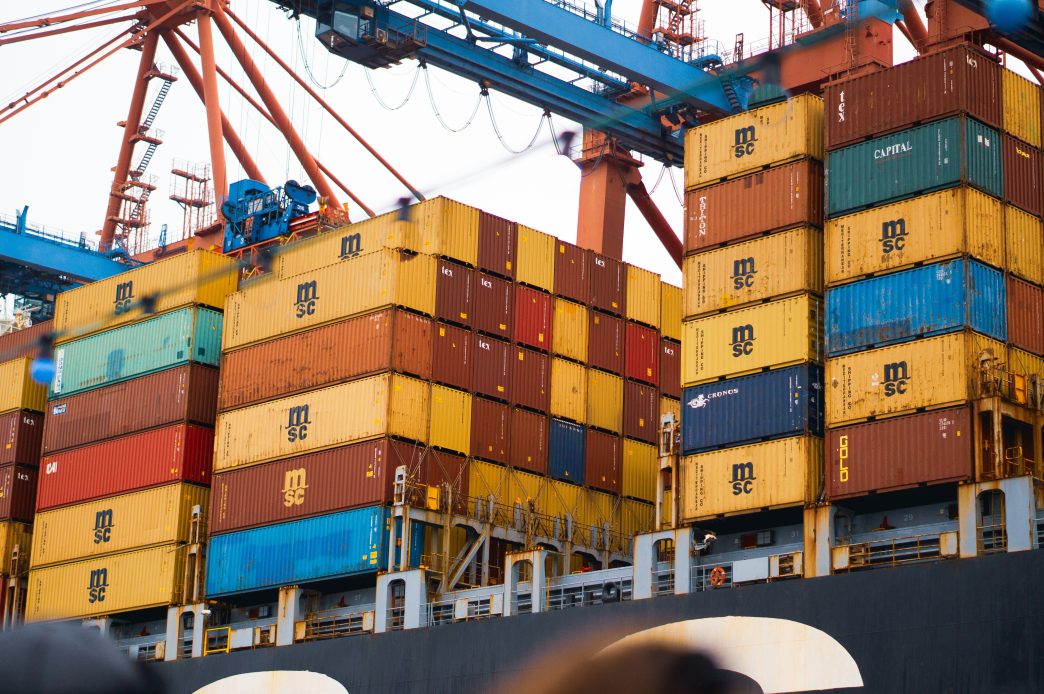
- The global maritime industry is facing a surge in autonomous cyberattacks
- Industry data shows that up to 60 per cent of newly disclosed software vulnerabilities are now being weaponised within 48 hours
- Experts warn that the same technology is enabling attackers to launch highly automated attacks before defenders realise
The global maritime industry is facing a surge in autonomous cyberattacks as artificial intelligence rapidly transforms both shipping operations and the methods used by hackers, new research has found.
Industry data shows that up to 60 per cent of newly disclosed software vulnerabilities affecting ships, ports and offshore assets are now being weaponised within 48 hours.
The findings come as shipping companies increasingly adopt AI to streamline operations, recruitment and vessel maintenance.
However, cybersecurity experts warn that the same technology is enabling attackers to launch highly automated attacks that can unfold before defenders even realise a breach has begun.
The shift has been stark. In 2018, attackers typically took 63 days to exploit a newly disclosed flaw.
By 2024, that timeframe had dropped to five days. Today, AI-powered hacking tools have cut the window to less than 48 hours, with some systems reportedly targeted within 15 minutes of a vulnerability being detected.
A new research paper from maritime cybersecurity firm Cydome found that 87 per cent of organisations now view AI-related vulnerabilities as their fastest-growing threat, signalling what researchers describe as a collapse of the traditional cybersecurity response cycle.
Tetsuji Madarame, a maritime and logistics expert and former Head of Digital Transformation and Innovation at NYK Line, said that as AI moves rapidly from generative systems to agentic and physical models used in areas such as autonomous navigation and fleet optimisation, ‘protecting AI-related assets must be a top priority.’
According to Cydome’s analysis. 83 per cent of phishing emails aimed at multinational maritime crews are now AI-generated and written in native languages tailored to cultural nuances.
Voice phishing (vishing) incidents have surged 1,600 per cent, which is allegedly driven by AI tools capable of cloning executive speech patterns with near-perfect accuracy.
Identity fraud has risen 195 per cent, mostly due to AI-enhanced images, deepfake videos and automated location masking.
Researchers warn that the wider digital ecosystem is increasingly crowded with automated entities, estimating that 82 AI identities now operate online for every one human identity, complicating authentication and trust.
The report also identifies the rapid expansion of edge-network devices as a growing source of vulnerability for maritime operators.
Cydome recorded an 800 per cent increase in attacks on edge infrastructure in 2025, with 20 per cent directly targeting firewalls and VPN systems.
The findings come from the Cydome Maritime Cyber Trends Report 2026: What Shipping Executives Need to Know, which draws on operational data, incident logs and insights from 13 industry leaders, including shipowners and classification societies.
The report concludes that while AI is delivering significant operational efficiencies across the maritime sector, it is also enabling attackers to deploy autonomous, adaptive and increasingly undetectable cyberattacks.


